Norfolk County Council confirms plans to shut 38 children’s centres in Norfolk


  On the 22nd of January, Norfolk County Council’s Children’s Services Committee made the decision to close 38 out of 53 children’s centres in Norfolk.

In September 2018, the committee originally proposed the closure of 46 children’s centres. Children’s centres provide families with children aged 0-5 with services such as a ‘Pathway to Parenting’ course for advice during pregnancy and after the birth of the baby, support for parents and ‘Stay and Play’ sessions for children including cooking, dancing and crafts.

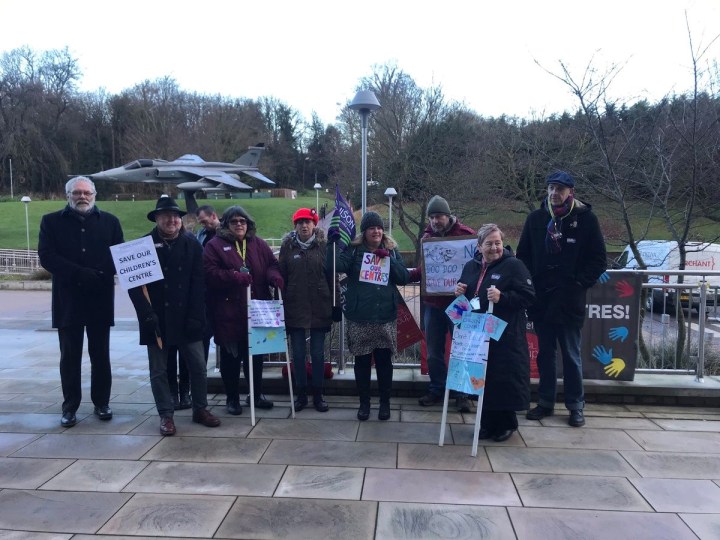
Protesters gathered outside County Hall on the morning of the meeting, holding signs with slogans such as “Save Our Centre”. There have been multiple protests against the closures in recent months, including an incident where the loud protests of campaigners at Great Yarmouth Town Hall lead to the police being called. Attending the council meeting in the public gallery, they began shouting and some refused to leave the gallery when asked. There was also a protest in Thetford, where parents and campaigners held their own consultation meeting on the impact of the proposed closures.
ella wilkinson archant photo.jpg_large

Protesters outside County Hall on the morning of the meeting.

Photo: Ella Wilkinson/Archant

  The number of centres due to close was reduced from 46 to 38 after the council’s consultation with the public – though some parents think they could have done more. Speaking to the Eastern Daily Press, mother Amber Rout said: “I don’t think they have done enough. Keeping a few open seems like a token gesture and keeping a few that they view as essential is one thing, but in my view they are all essential.”

Children’s Services chairman Stuart Dark told the Eastern Daily Press that after listening to the public’s concerns the council will offer sessions in 47 libraries, outreach support “in people’s homes and venues across the county”, and £500,000 will be made available for the remaining 15 centres, to be used as “early childhood and family bases in areas of highest need”.

Director of Children’s Services Sara Tough insisted the motion was not to save money, but is a redesign of the system to give children better support. She also said that volunteers would not be replacing professional jobs. However, it is uncertain how many staff will be at the remaining centres, or whether voluntary organisations will use the buildings to provide some of the services needed.

Further information on children’s centres can found here: https://www.norfolk.gov.uk/children-and-families/childrens-centres

Frances Butler

 

Local authorities launch co-operative effort to help prevent flooding


Some households, businesses and schools are now eligible to have a water butt or rain water planter installed free of charge, as a part of a new project to reduce the risk of surface water flooding in Norwich.

Both can reduce the risk of flooding: water butts store the rain water whilst planters slow the speed of rainfall entering drains, as it has to pass through the pipes within the planter.

The initiative comes after flash floods in 2014 saw traffic to come to a standstill and streets to fill with water. Speaking to the BBC, Hawthorne Avenue resident Stacey Connerty, whose street was flooded, said the problem “arises every time there is heavy rain” and despite repeated requests for the highways and councils to remedy the situation, “to date nothing has been done.”

The project is funded by Anglian Water and the Interreg European Union CATCH’s flood reduction and climate change project, and includes Norwich City Council, Broadland District Council and the Environment Agency.

Lead Infrastructure Planner at Anglian Water, Andy Bird, said the benefits of the scheme are that it is “far less disruptive than laying a bigger sewer” and “deliver the best possible outcomes for our customers and the environment in a cost-effective way.”

According to the UK Climate Change Risk Assessment 2017, flooding is one of the main risks communities in Norwich face from the effects of climate change.

Councillor and Chair of Norfolk County Council’s Environment, Development and Transport Committee, Martin Wilby, says as well as damaging property and belongings, flooding can be “hugely traumatic and stressful”. He added the Council have a responsibility to consider the causes and help prevent further flooding, aiming to improve flood resilience “without causing disruption to communities, homes and infrastructure.” Rain water planters in particular fulfil this requirement, as they also attract wildlife and maintain the plants within it.

The main areas eligible for a free water butt or rain water planter include Catton Grove, Nelson and Town Close. A map of the eligible areas and more information can be found at www.norfolk.gov.uk/catchproject.

Frances Butler

Norwich Market: Have Norwich City Council delivered on their promises?


For the last two years, Norwich City Council have been aiming to improve the local market by creating a cleaner environment, a greater variety of food stalls and encouraging new businesses. It’s part of a 10 year plan to create more job opportunities in the city, attract more visitors, and encourage understanding of different cultures within the community.

Currently, the market is bringing in an estimated £8 to £10 million pounds to the local economy. A customer survey carried out by the council highlighted the need to attract the younger generation to the market, increase promotion and have a wider variety of goods, including more craft stalls.

Have the council delivered on their promises?

I spoke to stall owners and shoppers to find out.

(The audio also includes clips from fellow UEA Journalism students Ben Hinton and Aaron McMillan).

Frances Butler

Investigations still underway into deaths at Banham Poultry


More than a month on, investigations are still underway into what caused the deaths of pest control workers Jon Collins and Neil Moon, found dead at Banham Poultry in Attleborough on the 4th of October.

Police were called to the scene at around 1.10am as well as two ambulances, a rapid response vehicle, an air ambulance and three hazardous area response teams. A gas leak from a nearby refrigerator was identified as a potential line of inquiry, but was not believed to be a threat to the wider public.

The deaths occurred a day after it was announced the factory was up for sale, threatening the future of more than 1000 workers.

  Speaking to the BBC, a spokesperson from Banham Poultry said they were “deeply saddened” and sending their “deepest condolences” to family and friends. They added they were working closely with the police and the local health authorities to determine what happened, as well as conducting an internal investigation.

A statement on the Norfolk Police website the day after the incident revealed the investigation taking place between the police and the Health and Safety Executive. It also said a post mortem examination would take place to discover the cause of the men’s deaths, and specialist investigators were examining the gas leak at the scene to determine whether it could be linked.

Richard Pummell, owner of local company Express Pest Control, told the Eastern Daily Press it had “taken them all by shock and dismay that something like this can happen on our own doorstep,” and it was “an extremely sad day.”

Last week, the funeral of 34-year-old Jon Collins took place at Norfolk Bluebell Wood Burial Park in Hainford. Mr Collins lived in Watton with his fiancé and three children. His main interests in music and fishing were incorporated into the service, which included songs by Slipknot and KoRn and a fish tribute made of leaves.

No further information has been released regarding the state of the investigations.

Frances Butler


New Greater Anglia trains will provide improved facilities for disabled passengers


  The design of Greater Anglia’s new trains (set to replace all current trains by 2020) include new facilities for disabled passengers, including a retractable step between the floor and platform and floor-level help buttons in toilets.

The changes come after complaints were made by disabled passengers on various train services this summer. Norwich-based comedian Tanyalee Davis was asked to move her mobility scooter out of a wheelchair space for a pram to be parked there. In a video uploaded to YouTube, she said she was being “kicked off” the train at the next station because she refused. Speaking to The Independent in August, 29-year-old Hollie Brooks said she “felt like a second-class citizen” when the wheelchair space she booked was blocked by a catering trolley, meaning her boyfriend couldn’t sit with her and she had to face the window for the duration of the journey.

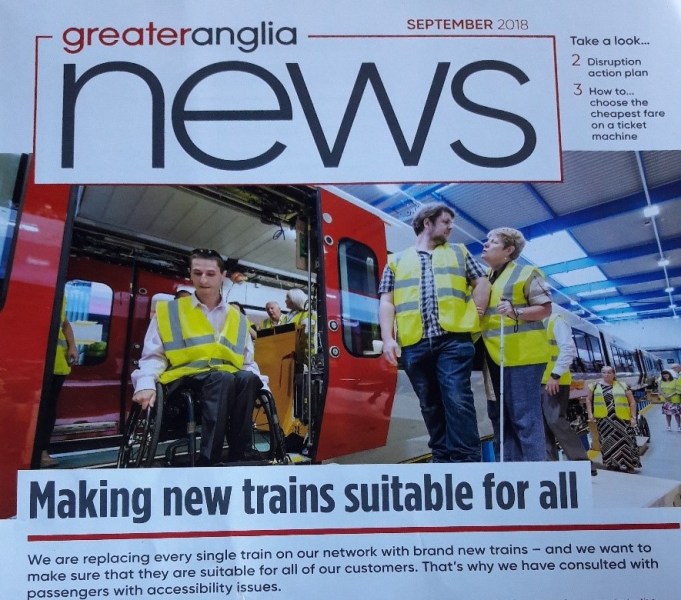
In their September newsletter, Greater Anglia said they were making their new trains “suitable for all”, consulting a group of disabled rail passengers and professionals whilst the trains were being developed. The group consisted of wheelchair user Dominic Lund-Conlon, blind and visually impaired Terri Sawkins, Jim Watt and his guide dog Legend, and Helen Sismore from East Anglia Guide Dogs. After making initial recommendations last year, they visited Switzerland this summer where 58 of the 169 new trains are being manufactured by Stadler. They recommended further adjustments such as ‘modesty screen’ between raised seating areas and the disabled seating section of the trains.

As a result, Greater Anglia’s website says the new trains will include emergency help buttons at floor level in each accessible toilet, a retractable step between the train and platform, and an accessible seating area where passengers have the option to face forwards or backwards.

The other services the company currently offer for disabled passengers include help to buy your ticket, getting on and off the train, booking assistance for the length of your journey, being met by staff when getting off the train and help with carrying luggage.

Further details of Greater Anglia’s services and their Disabled Persons Policy can be found here: https://www.greateranglia.co.uk/travel-information/accessibility/disabled-peoples-protection-policy.

Frances Butler


Gain real-life firefighting experience and new friends with Fire Cadets


Young people across Norfolk are being encouraged to gain practical experience, make new friends and get involved in their local community through joining Fire Cadets.

First set up by Norfolk Fire and Rescue in 1984, Fire Cadets is open to anyone aged 13-17 and offers 5 different units in areas including Wymondham, Great Yarmouth and Sheringham. Members are provided with their own uniform and train under current firefighters as part of nationally recognised programme to experience the everyday realities and challenges of the job – such as safe operation of equipment and responding appropriately to an emergency situation, which may prove useful in the future. One such example was when cadet Jess Auston provided first aid to a toddler who ran into a table, claiming her training enabled her to remain calm and quickly treat the child. She subsequently received an award and was made crew manager of her unit.

Cadets featured on the Norfolk County Council website describe experiences such as developing team building and leadership skills as well as experiencing what firefighters do “out on an actual call”, as Jack says. The rigorous testing and hands-on nature of their training can also lead into a professional career. 13-year-old Ben has an older brother who was a cadet for five years before joining Hethersett fire service, and former cadet Ryan is now an on-call firefighter at Wymondham, who believes he was part of “one of the best cadet schemes around”.

In addition to weekly drills at their local station, fire cadets are trained in fire safety, climbing drill towers and safely removing car parts in case of road accidents. Other opportunities include participating in local community events, such as spending a night on the streets to raise awareness for homeless people and visiting the elderly for a day.  Extending their activities beyond the local community, fire cadets from Norfolk took part in international event NORJAM this summer, teaching scouts and guides from around the world about fire safety.  Residential trips focusing on teamwork and dedication are often organised with the latest involving volunteering in soup kitchens and abseiling in Derbyshire.

Fire cadets have gained a good public reputation, as shown at a team building day for Norfolk Fire and Rescue at Bowthorpe in 2017. Chief Fire Officer David Ashworth stated he was “rightly proud of our fire cadets”, whilst Norfolk County Council Chairman John Ward described the cadet unit as “a valuable and worthwhile part of the fire service.”

Anyone interested in becoming a cadet is encouraged to email Lydia Durrant at Lydia.Durrant@fire.norfolk.gov.uk.

Frances Butler