Should we be worried about children and young people’s mental health?


In January 2019, the father of teenager Molly Russell claimed distressing images found on social media sites including Instagram “helped kill my daughter”. His statement caused an increase in calls from concerned parents to youth mental health charities and an apology from Facebook, the owners of Instagram.

Young people’s suicide charity Papyrus told the BBC that within a week of Molly’s death being reported, they had around 30 calls from parents who believed social media played a part in their children’s suicides. It also resulted in a warning from Health Secretary Matt Hancock that if social media firms do not heed calls to remove harmful content, Parliament has the power to ban them. Speaking on the Andrew Marr show, he said if social media companies “need to do things they are refusing to do, then we can and must legislate.” He stated that the government must act to ensure “this amazing technology is used for good, not leading to young girls taking their own lives.”

three people using smartphones
Photo by rawpixel.com on Pexels.com

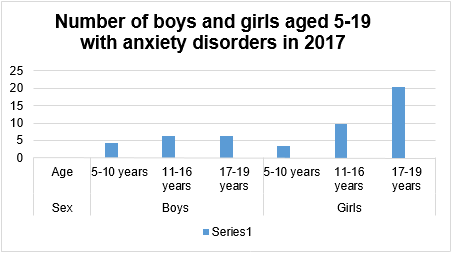
  More recently in 2017, the NHS undertook a survey on the mental health of 9,117 children and young people aged 2 to 19, between January and October 2017. It revealed that 1 out of 8 5-19 year olds had a mental disorder – emotional, behavioural, hyperactive or otherwise. Emotional disorders particularly increased when the children became teenagers and appeared to be more of an issue for girls than boys. Between the ages of 5-10 the two main emotional disorders, depression and anxiety, were higher for boys compared to girls. However, from the age of 11-19, there is a significant increase in the amount of girls with an anxiety disorder – roughly four times the number of girls at age 5-10.

Anxiety Disorders Graph

Graph: Frances Butler

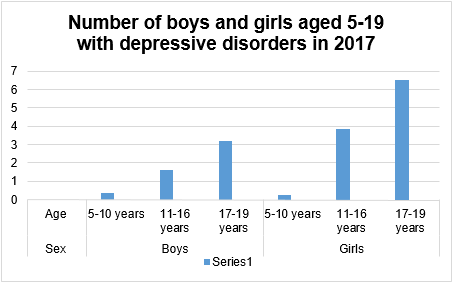
  On the other hand, although less young people overall had depressive disorders, it affected both boys and girls. Whilst there were still a significantly higher number of girls than boys, the highest number for both was between the ages of 17-19.

Depressive Disorders Graph

Graph: Frances Butler


Whilst the number of children with emotional disorders is small when compared to the 9,117 children that took part – less than 7 girls with depressive disorders and just over 20 with anxiety disorders – the research shows that mental health is serious problem for some children, and becomes more frequent in their teenage years – so why isn’t it being picked up on? One possible reason is that mental health issues are more commonly associated with adults rather than children.

 A study published in The Lancet Psychiatry in February found that out of more than 2,000 18 year-olds, nearly a third had experienced childhood trauma; a quarter of which went on to develop Post Traumatic Stress Disorder (or PTSD), which can cause the person to feel isolated and experience flashbacks and disassociation. As told to the BBC, 20 year-old Flo Sharman had a breakdown when she was 8, linked to the trauma of an operation where she had to be resuscitated multiple times as a baby. Doctors believe her breakdown was caused by PTSD. She says her parents had no idea it could have been caused by the operation, and many people don’t associate PTSD with a young child – it’s more often linked to those in the armed forces.

Another potential reason is the circumstances the child is in, and what they may be experiencing. A study published by University College London in January revealed children who experience a family break-up as an older child or young teenager are more likely to develop emotional and behavioural problems than those living with both their parents. Co-author of the study Emla Fitzsimons said family splits in late childhood are “detrimental to adolescent mental health”, possibly because children are “more sensitive to relationship dynamics at this age”, and family break-ups may be more disruptive to the child’s education and peer relationships.

yellow plush toy
Photo: Pixabay on Pexels.com

  What is being done to tackle the issues many children and young people seem to be facing?

One example is Children’s Mental Health Week, which took place in February this year. Launched by Place2Be in 2015, it aims to highlight the importance of children and young people’s mental health through resources for schools, youth groups and parents and carers. A registered charity, it relies on donations and its supporters include the Duke and Duchess of Cambridge, both founding members of the Heads Together campaign which aims to tackle the stigma surrounding mental health.

Mental health charity Mind also addresses some of the issues children and young people face, offering a list of organisations that provide support for them – such as Young Minds and Childline – as well as a guide for parents who may be struggling with their own mental health.

You can find out more about the organisations mentioned in this article by following these links:

Papyrus: https://papyrus-uk.org/ or call 0800 068 4141

Children’s Mental Health Week: https://www.childrensmentalhealthweek.org.uk/

Heads Together: https://www.headstogether.org.uk/

Mind: https://www.mind.org.uk/

Young Minds: https://youngminds.org.uk/

Childline: https://www.childline.org.uk/ or call 0800 1111

Frances Butler

“Black, queer, sword and sorcery”: Marlon James at the UEA Literary Festival


It’s a novel which draws inspiration from J.R.R. Tolkien’s The Lord of the Rings, truly defies all efforts of categorization” and has been labelled a “colonial-era catalogue of clichés” by The Guardian – but tonight Marlon James is here to talk about Black Leopard, Red Wolf in his own words.

UEA alumni and crime writer Tom Benn opens the conversation by asking James about some of his previous work. It turns out the author was already researching the new novel before winning the Man Booker Prize for A Brief History of Seven Killings – about the attempted assassination of Bob Marley – in 2015. As the first book of a fantasy trilogy that James has described as an “African Game of Thrones”, you might expect it to be meticulously planned out – but James says this isn’t the case.

“Once you start thinking about what you should write, then you’re in trouble.”

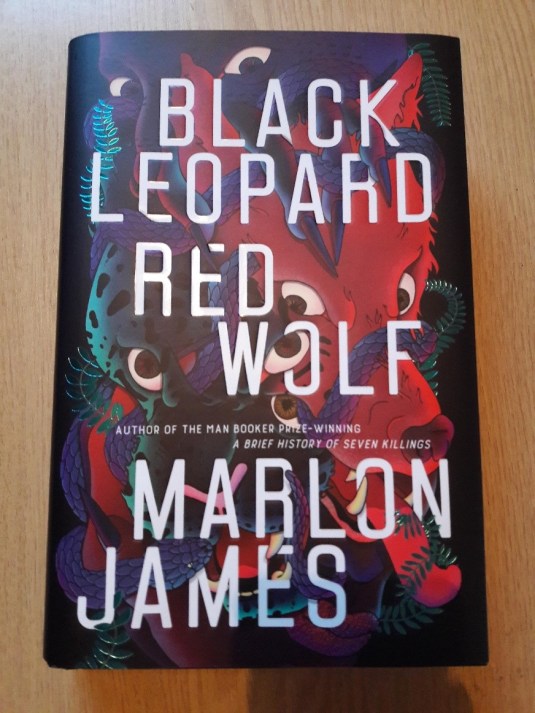
Black Leopard Red Wolf.jpg

A hardcover copy of Black Leopard, Red Wolf.

Photo: Frances Butler

  Drawing on a rich history of African mythology, the novel avoids a common fantasy trope found most notably in George R.R Martin’s A Song of Ice and Fire series: starting with the rise or fall of a royal house. As James tells Benn, when writing his characters, he wanted to start at the bottom rather than the top.

“I started at the street and didn’t really care about whether they got to the royal house.”

  He wanted to have a character who could explore the dirty, dangerous aspects of the world from ground level, which lead to the creation of the protagonist, Tracker. However, they do eventually get to the royal house. The passage James chooses to read aloud details the moment a queen meets the first light-skinned man she has ever seen. ‘Sandman’, as she calls him, has to have his words translated by Tracker and is stripped in front of the court, who are directed to laugh or gasp when deemed appropriate. Heavily inspired by Lewis Carroll’s Queen of Hearts, it shows how James’ writing manages to inject humour and wit into a situation with just enough dark, political undertones to make you uncomfortable. It could be seen as a comment on colonialism, racism or class: and James insists we have to remember those who have suffered – or are suffering – in order for progress to be made.

“Who’s lifting up that tower that you’re stepping on?”

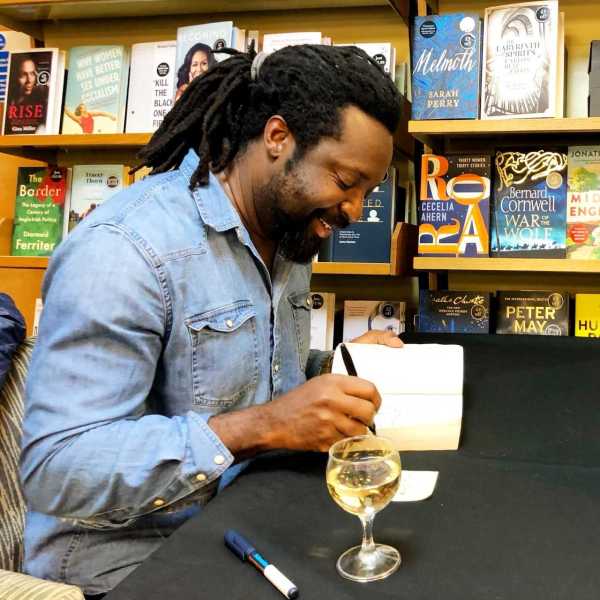
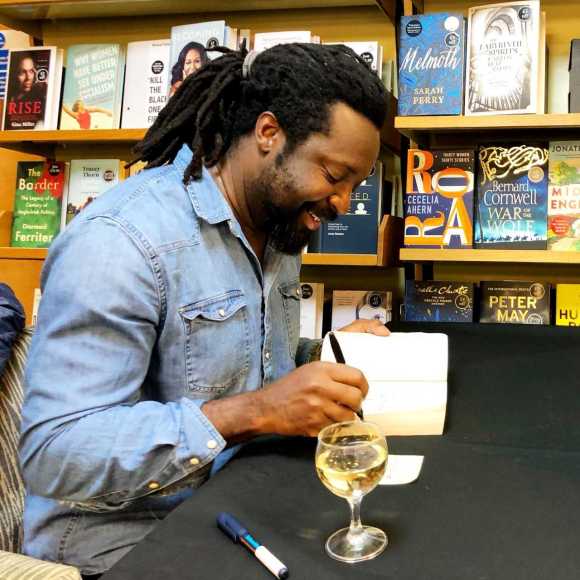
Marlon James UEA LitFest

Marlon James signs copies of his books at UEA Waterstones after the talk.

Photo: @UEALitFest

  In a fantasy world described by Benn as a unique example of a “black, queer, sword and sorcery” narrative, James tackles the prominent issue of representation. Whilst unsure whether it can be labelled as an African novel, he believes “it’s the only context in which this book can exist.” African tales are not typically male-centric, and Tracker’s role as an unreliable narrator is similar to folklore tricksters such as Anansie the Spider. James points out to the audience that you don’t always have to write from personal experience, as he has heard people say they can’t write black people, as they don’t have any black friends. His response? “I don’t know any serial killing maniacs, but I’ve written one.”

  As the talk draws to a close, Benn asks James if any of the criticism towards Black Leopard, Red Wolf bothers him. Quite the opposite, in fact. Referring a to a particular comment made by The Guardian, he exclaims:

“Oh my goodness, I’m Heart of Darkness for gamers?! Can I get a t-shirt?”

Frances Butler

Norfolk County Council confirms plans to shut 38 children’s centres in Norfolk


  On the 22nd of January, Norfolk County Council’s Children’s Services Committee made the decision to close 38 out of 53 children’s centres in Norfolk.

In September 2018, the committee originally proposed the closure of 46 children’s centres. Children’s centres provide families with children aged 0-5 with services such as a ‘Pathway to Parenting’ course for advice during pregnancy and after the birth of the baby, support for parents and ‘Stay and Play’ sessions for children including cooking, dancing and crafts.

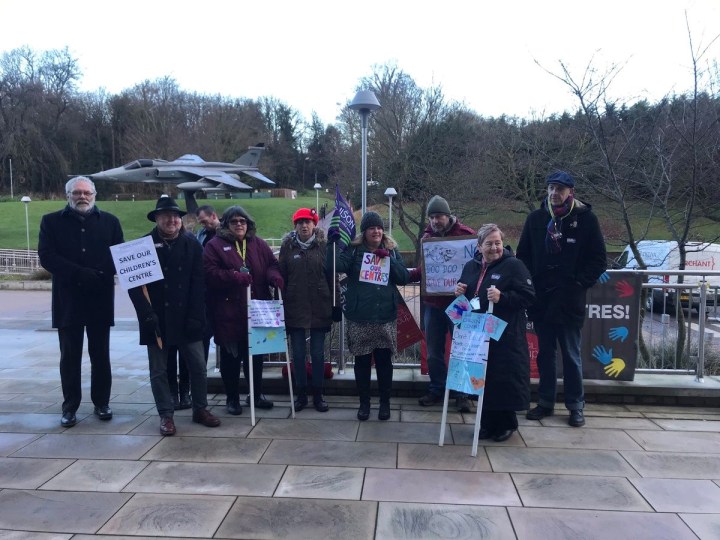
Protesters gathered outside County Hall on the morning of the meeting, holding signs with slogans such as “Save Our Centre”. There have been multiple protests against the closures in recent months, including an incident where the loud protests of campaigners at Great Yarmouth Town Hall lead to the police being called. Attending the council meeting in the public gallery, they began shouting and some refused to leave the gallery when asked. There was also a protest in Thetford, where parents and campaigners held their own consultation meeting on the impact of the proposed closures.

ella wilkinson archant photo.jpg_large

Protesters outside County Hall on the morning of the meeting.

Photo: Ella Wilkinson/Archant

  The number of centres due to close was reduced from 46 to 38 after the council’s consultation with the public – though some parents think they could have done more. Speaking to the Eastern Daily Press, mother Amber Rout said: “I don’t think they have done enough. Keeping a few open seems like a token gesture and keeping a few that they view as essential is one thing, but in my view they are all essential.”

Children’s Services chairman Stuart Dark told the Eastern Daily Press that after listening to the public’s concerns the council will offer sessions in 47 libraries, outreach support “in people’s homes and venues across the county”, and £500,000 will be made available for the remaining 15 centres, to be used as “early childhood and family bases in areas of highest need”.

Director of Children’s Services Sara Tough insisted the motion was not to save money, but is a redesign of the system to give children better support. She also said that volunteers would not be replacing professional jobs. However, it is uncertain how many staff will be at the remaining centres, or whether voluntary organisations will use the buildings to provide some of the services needed.

Further information on children’s centres can found here: https://www.norfolk.gov.uk/children-and-families/childrens-centres

Frances Butler


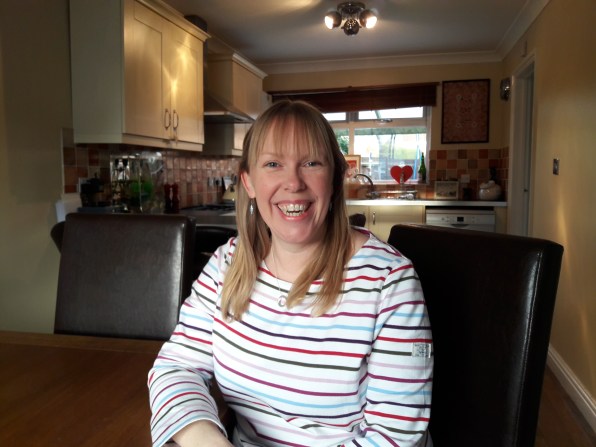
Emma Smith: “It’s got to be meaningful and make a difference.”

20190107_092715

Emma at her home in Cambridgeshire.

Photo: Frances Butler

Emma Smith has recently become a qualified Ollie Coach, helping young children with issues such as bullying and family trauma.

I meet her at her home one cold Monday morning, where I am welcomed in with a smile and a cup of tea. We sit down at her dining table and she explains why, after 20 years in the teaching profession, she made the switch from teaching to coaching – and what it all means to her.

As a child, she insisted that when she grew up, she would be a teacher. Despite their disbelief due to her young age – “lots of people laughed about it because I was so little” – it never left her.

After obtaining a Linguistics degree from York University, she applied for a Post Graduate Certificate in Education (PGCE) in primary school teaching at the University of Cambridge, focusing on the social and pastoral side of education. She had a “fantastic career” in her 20 years of teaching: both in England and overseas, as a team leader, Deputy Head and Head of School – but she was ready for something new, and kids’ mental health has always been her passion.

Emma’s words are often punctuated by laughs as a sign of her cheerful personality. However, she becomes serious when describing the moment when, as a teacher, she was first concerned about children’s mental health.

A young girl was self-harming at the age of 10 and was unable to access any immediate help, as she didn’t meet the thresholds. She remained on the waiting list for 6 months.

The referral guidelines for Child and Adolescent Mental Health Services (CAMHS) can be found here. In 2016, a Children’s Commissioner Lightning Review revealed that 79% of CAMHS providers imposed restrictions and thresholds on children and young people accessing their services – meaning that unless the case was sufficiently severe, they were unable to access their services.

Emma grew frustrated when she was told the girl would have to wait, as there weren’t enough people available.

“If you’re self-harming, a week is a lifetime. 6 months is not good enough.”

Last year, both the government and the Times Educational Supplement (TES) discussed the problems surrounding children and young people’s mental health. In July 2018 the government published their green paper, Transforming children and young people’s mental health provision. It reported that “around 1 in 10 children had some form of mental health disorder.” The paper outlined plans including a mental health lead in every school and college by 2025, and reducing wait times to 4 weeks for those in need of urgent help. In their issue on the 30th of November, TES published an article beginning with a statistic from NHS Digital’s survey revealing that “on average, three pupils in a class of 24 will be struggling with poor mental health.”

Children’s mental health has never been more important, says Emma. They are our future adults who will be “running our jobs and running our country – so why aren’t we chucking more investment at them and helping them now?”

Following her initial concerns as a teacher, Emma knew she wanted to get involved with children’s mental health – but how? She didn’t want to return to university or have to retrain.

“I found out about Ollie and His Superpowers, which was a real turning point for me.”
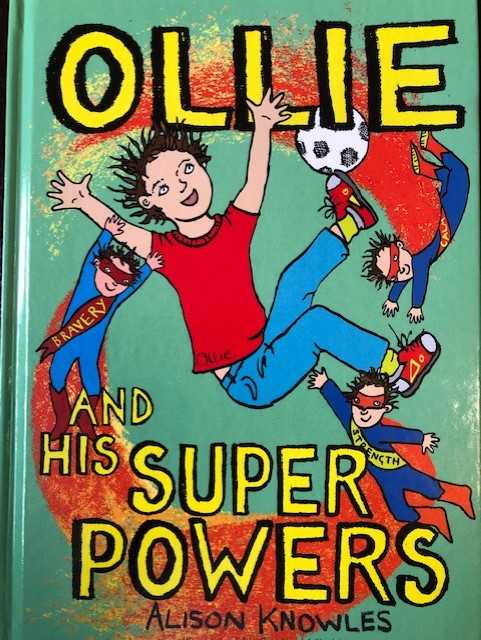
Ollie Cover

Ollie and His Superpowers by Alison Knowles. 

Photo: Emma Smith

  Ollie and His Superpowers is a book by Alison Knowles, who developed the Ollie Coaching programme to help children and adults develop good mental health habits. Ollie has smaller versions of himself for each emotion – such as Happy, Sad, Scared or Excited. The main aim of the coaching programme is to reduce the number of young people getting to crisis point, through group and one-to-one sessions as well as school visits. Emma works with children between 4 and 11 and recognises the Ollie programme won’t solve everything, “but if we save one child from self-harming, to me that’s a win-win. Every one of those statistics is too high in my view.”

She says many parents struggle financially and logistically with accessing the mental health services available, and as an ex-Headteacher, her main difficulties were how high the thresholds were and finding the money to fund the services.  Along with two other Ollie coaches, she is currently designing “plans, assemblies, parent workshops we can roll out for our under 7 year olds, in the hope that we can get in before there’s a problem.” Getting mental health introduced into the curriculum from age 4 and up wouldn’t need much, she says – it would only “need a few key lessons fed into what you’ve already got.”

She has always used stories as a way to open up difficult subjects for children, as asking them directly can be too much. She says when reading a book, a child may start talking about the character in the story, but often they are talking about themselves – which works with the Ollie technique of disassociating a feeling or an event from a child. The concept of Ollie is about children “controlling their emotions and learning to self-regulate – and help them identify what a feeling is.”
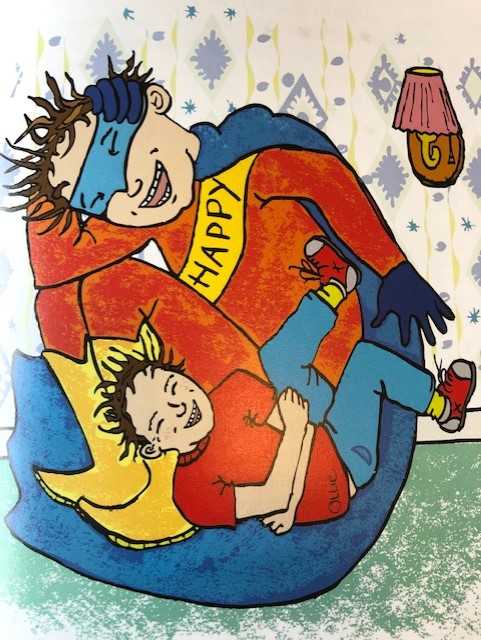
Ollie Happy

Ollie and the “Happy” version of himself. 

Photo: Emma Smith

One book in particular – Granpa by John Burningham – helps to discuss bereavement. At the end of the book, Granpa’s chair is empty. Emma says this image is important because for “some little ones, it goes over their head – the kids who are ready, who clock it, say “he’s dead”. It’s opening up conversations about bereavement when they’re ready.”

To become an Ollie Coach, the training takes at least 6 months. One weekend a month in London for face-to-face training, as well as reading, essays, case studies and a practical assessment. Emma’s group of 15 were the first to take the Ollie course from scratch, as the training was previously used as an add-on for counsellors and therapists.

One of the main Ollie Coaching techniques is “anchoring” – finding memories of when the child felt happy or confident and drawing on those.

Emma tells me: “When you say to a young child, ‘where’s your heart, where’s your toe?’ they know all those things. When you ask them, ‘where’s happy?’ it’s a bit grey, it’s a bit muddled. Some children say happy is in their tummy, it’s a hot feeling, it’s the colour yellow. Once it’s tangible, you have more chance of working with them.”

One young boy was worried about playing football at lunchtime, so Emma helped him to find moments where he felt calm and confident and develop a method of tapping his pocket to anchor himself when playing.

As Ollie Coaches work closely with children and their mental health, Emma’s main responsibilities are child protection and safeguarding, which she takes very seriously. A child may say something during a session that Emma has a responsibility to pass on, “because I always say that in a community you need to be the ears and eyes if you see something that doesn’t look right.” An agreement with the parent is always set up, due to the child’s young age and because “you’re dabbling with someone’s wellbeing, and that’s quite a fragile part of themselves.” However, Ollie Coaching is not always appropriate for everyone. As part of the training process, Emma had to read potential emails from parents and assess which clients she would take on. For example, she would not do Ollie work with someone who was suicidal. For those higher need issues, Emma says, “they do need to go through the medical profession.”

The issues Emma deals with most are family bereavement and illness, bullying and anxiety. She was surprised at how much low-level anxiety she would unearth. She says for some children, “everything looks okay, they’ve got nice friendships, they’ve got hobbies –  but there are some things that really stop them in their tracks, getting a bit paralysed with fear.”

“Why is there more anxiety? I’d love to know the answer to that.”

I ask her what she thinks might be causing these issues. She says that for whatever reason, we’re seeing more cancers and medical conditions, a more pressured school system and parents are also finding life difficult: “I met more parents than ever as Head who were stressed, were depressed, suffering from anxiety themselves, and we know with children that they pick up on that, as much as parents don’t want them to.” Children are under more pressure to perform well at schools. One child in Reception showed her his work and was already thinking about he could improve it.

“At the age of 4, do we really need to be that hung up yet, on how to make it better next time?”

Emma often sees children becoming more aware of their feelings, recognising that all of them are needed and can be regulated. “Feelings aren’t scary anymore – we take these feelings out to talk to them, you see.”

Emma demonstrates.

“Do you mind if I just take out Worried?”

She stretches out her hand away from us, as if she’s holding a tiny person in it.

“Suddenly, Worried is over here and he’s only a little part of you, because you’re a whole big person.”

Ollie Excitement

Ollie and the “Excitement” version of himself. 

Photo: Emma Smith

Since becoming a coach, one girl has made the biggest impact on Emma. “I had the biggest change with her, it was amazing.” During her first session, she refused to sit at the table and kept asking when she was going home – but eventually, she learnt to regulate her fear enough to visit a family member who was going to pass away. After the sessions had finished, the girl’s mother rang to say she had been teaching her friend some of the techniques.

Helping children learn to manage their anger is another important part of Emma’s work. She doesn’t tell them anger is bad because “that’s not real life.” Instead, she works with them to take away any fear and figure out what they are feeling. When identifying anger, “you’re not saying being angry is wrong, what you’re saying is when Angry takes you over, and you hurt somebody, that’s the bit you get in trouble for.”

“We help them think of ways to shrink Angry, or let Angry out of their body in a way that doesn’t hurt somebody.”

Has becoming an Ollie Coach made Emma more aware of issues her own child might face?

Completely, she says. It’s already helped her be a better parent. “From having done the course, I can look at my son and almost predict some future hotspots, and I get a chance to get alongside him, maybe even before it becomes an issue for him – which is such a luxury.” For Emma, being a mum is a huge part of her life. Being an Ollie Coach allows her to make a real difference to other families, whilst also focusing on her own.

“Parenting is a rollercoaster and it’s wonderful. Being a mum is my greatest achievement.”

Her roles as a teacher, a mum and as an Ollie Coach are all extremely important to her. In today’s world, she says, “you see a lot of families are battling losing people to cancer, you hear of horrendous attacks, assaults, suicide. Life is turbulent for families, and that is going to knock on to our little people.” Working with the Ollie programme allows her to help children affected by those issues, and in turn, their families. “We can’t shield them from it, we can’t bubble wrap them – but we need to try and give them the tools to navigate it.”

To find out more about Ollie and His Superpowers and the Ollie Coaching programme, visit: https://www.ollieandhissuperpowers.com/.

Frances Butler

Live Review: Curved Air at the Waterfront Studio

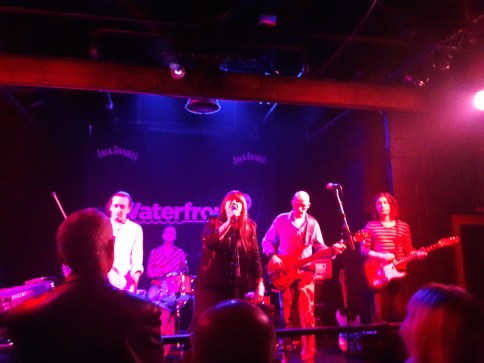
20181115_213000

Curved Air at The Waterfront Studio. 

Photo: Frances Butler

(Originally published for Concrete).

My father first discovered Curved Air’s unique blend of electronic, folk-influenced rock through a school friend as a teenager – a chance discovery that lead to his disbelief and excitement at us witnessing their live show together more than 40 years later.

Singer Sonja Kristina has been the only constant member since the band’s formation in 1969. Their debut album Air Conditioning was released in 1970, resulting in BBC Radio One sessions with John Peel and supporting slots with Black Sabbath, Deep Purple and Jethro Tull. However, in 1976 – the same year they played at UEA – musical differences between band members caused their break up. Reforming in 2008, the band currently features guitarist George Hudson, bassist Chris Harris, drummer Andy Tween, keyboardist Robert Norton and violinist Paul Sax.

Tonight, the venue may not be filled to capacity, but it is full of people who have come here to see only one band, who humbly take the stage before showcasing exactly why their fans are still thrilled by their music. Early singles It Happened Today and Backstreet Luv are received just as well as new songs from the band’s most recent album, North Star, such as Images and Signs. Each band member appreciates the skill of the other, whether it’s during Sax’s violin at the start of Vivaldi, Hudson’s guitar solo or the emotion of Norton’s keyboard playing.

Afterwards the band take photos, sign merchandise and chat with their fans, acknowledging the decades of commitment their music has inspired. Whilst signing a CD, Kristina tells one fan: “I never would have thought in 1974 that I would be here with you!”

Frances Butler

Local authorities launch co-operative effort to help prevent flooding


Some households, businesses and schools are now eligible to have a water butt or rain water planter installed free of charge, as a part of a new project to reduce the risk of surface water flooding in Norwich.

Both can reduce the risk of flooding: water butts store the rain water whilst planters slow the speed of rainfall entering drains, as it has to pass through the pipes within the planter.

The initiative comes after flash floods in 2014 saw traffic to come to a standstill and streets to fill with water. Speaking to the BBC, Hawthorne Avenue resident Stacey Connerty, whose street was flooded, said the problem “arises every time there is heavy rain” and despite repeated requests for the highways and councils to remedy the situation, “to date nothing has been done.”

The project is funded by Anglian Water and the Interreg European Union CATCH’s flood reduction and climate change project, and includes Norwich City Council, Broadland District Council and the Environment Agency.

Lead Infrastructure Planner at Anglian Water, Andy Bird, said the benefits of the scheme are that it is “far less disruptive than laying a bigger sewer” and “deliver the best possible outcomes for our customers and the environment in a cost-effective way.”

According to the UK Climate Change Risk Assessment 2017, flooding is one of the main risks communities in Norwich face from the effects of climate change.

Councillor and Chair of Norfolk County Council’s Environment, Development and Transport Committee, Martin Wilby, says as well as damaging property and belongings, flooding can be “hugely traumatic and stressful”. He added the Council have a responsibility to consider the causes and help prevent further flooding, aiming to improve flood resilience “without causing disruption to communities, homes and infrastructure.” Rain water planters in particular fulfil this requirement, as they also attract wildlife and maintain the plants within it.

The main areas eligible for a free water butt or rain water planter include Catton Grove, Nelson and Town Close. A map of the eligible areas and more information can be found at www.norfolk.gov.uk/catchproject.

Frances Butler

The rise of eco-friendly, ethical clothing: The Cotton Story

IMG-20181119-WA0005

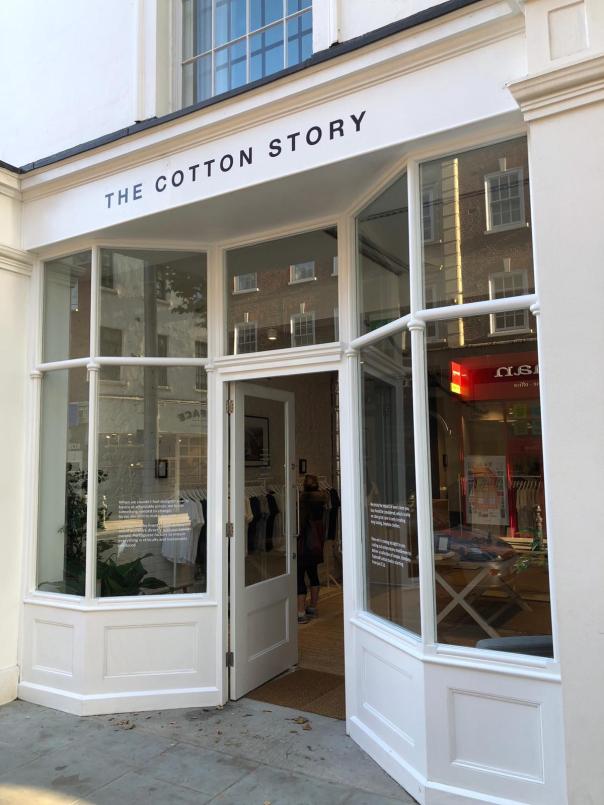
The front of The Cotton Story store on King’s Road, London. 

Photo: Fiona Webborn

With scientists’ warnings about catastrophic climate change, plastic pollution and the need to reduce our meat consumption, it seems the Earth is under ever-increasing pressure. By April this year more than 3.5 million British people were living a vegan lifestyle and it seems more people are making environmentally-friendly choices in their everyday life – including the clothes they wear.

Companies actively marketing ethical and eco-friendly clothes are gaining customers at a rapid rate: the value of ethical sales grew to £38 billion in 2015. However, clothes made from sustainable materials are often expensive: for example, one of Thought’s hemp dresses costs £69.90.

One company aiming to change this is The Cotton Story. Launched this year, they aim to provide “luxury everyday clothing at a fraction of the usual price”. I interviewed Brand Director Fiona Webborn, who joined founder Leo Mellis at the start of 2018 to develop the women’s clothing line and manage their social media. I found out what their “honest prices” mean, what Supima cotton – their main material – is, and what the reaction to their products has been like.

Why did you decide to start The Cotton Story?

  We couldn’t find designer quality basics that were sustainably and ethically made at affordable prices, so we decided to make our own.

When you mention “honest prices”, you offer a breakdown of material, labour and transport costs totalling £8.20 – but the products are sold at £18. Where does the additional £9.80 come from?

  We detail how much it costs to make each item so you know exactly what we paid to get that item to you. The additional costs added to our final price are there to pay for taxes, staff wages, product development, office space and other necessities to keep the business running.

How are your factories ethical?

  Both the cotton mill and the cut and sew factory are run by small local families in Portugal. By working so closely with them we know there is absolutely no slave or child labour in our production line. Every member of staff is paid fair wages and works in a clean, safe and comfortable environment. Our factories recycle all plastic, cardboard and metals once finished with, re-use the oils used in their machines and all our packaging is fully recyclable.

IMG-20181119-WA0000

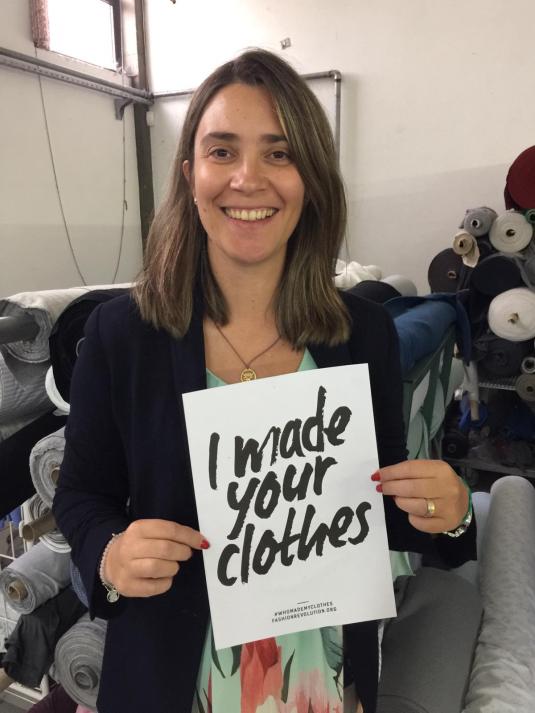
Helena, a worker at one of The Cotton Story’s factories.

Photo: Fiona Webborn 

What is Supima cotton and how is it different from regular cotton?

  Supima and regular cotton are two different species of cotton. The most common type of cotton typically has a fiber length of about 1 inch, whereas Supima cotton’s fiber averages 1.5 inches. Shorter fibers produce yarns that are rougher and subject to breaking. Longer fibers contribute to the strength and softness of the clothes ensuring they are more comfortable, retain colour longer and keep their form for a longer-lasting product.

Why do you think ethical clothing is important?

  By supporting small factories who treat their staff like family, our customers can be sure they aren’t contributing to the problems of slave or child labour that are so prevalent in this industry. In our store we highlight the incredible workers by showing their pictures on our walls, encouraging our customers to consider the hard work they put in and to write a thank you note to the staff. By recognising a human is behind the clothing you wear, it raises your consciousness to care for your clothing and appreciate that garment in a new light.

How important is affordable eco-friendly and ethical clothing?

  It costs more to make each item of clothing because more care is taken in minimising the negative effect on the environment, and each person in the supply chain needs to be paid a fair wage. Understanding that a £30 jumper made from high quality materials will last a long time supports the workers who made it, is friendlier to the environment and the customer can see it as an investment.

IMG-20181119-WA0010

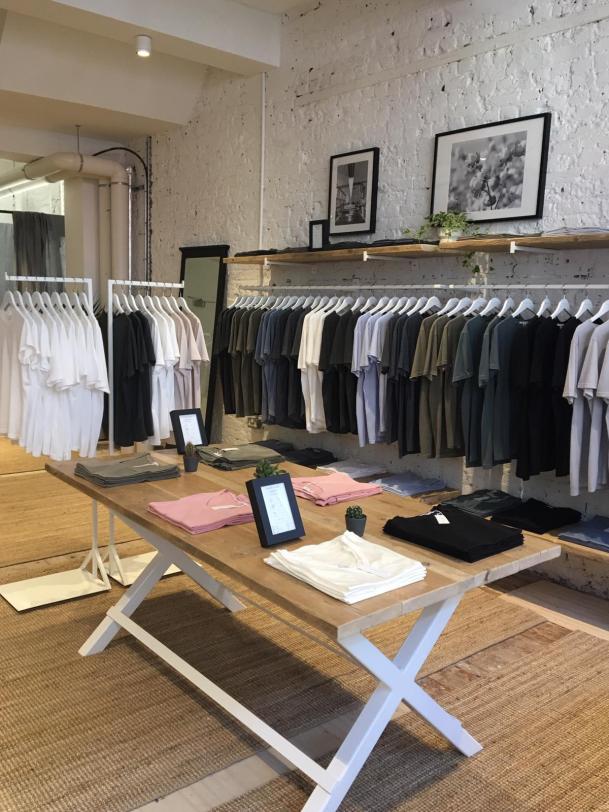
Inside The Cotton Story’s store on King’s Road, London. 

Photo: Fiona Webborn

Do you think more people are wanting to be eco-friendly and ethical in their daily lives (including the clothes they wear)?

  Absolutely. Whether it’s combating plastic pollution, finding alternatives to products containing palm oil or supporting workers’ rights, there’s small steps everyone can take in their day-to-day lives.

What has the reaction been like since you first launched the company?

  The reaction to The Cotton Story has been so incredible and it’s made us feel extremely proud to be creating something that really resonates with people. When they tell us they’d like a longer sleeve or a heavier weight cotton we’ll listen. The most common reaction we hear is ‘I’ve been looking for so long for a simple, good quality cotton t-shirt, and now I’ve finally found it’. We hope it makes our customers feel like what they say matters to us, because it does.

The Cotton Story’s products can be found at their store on 55 King’s Road in London, or at their website: https://thecottonstory.co.uk/.

Frances Butler

Norwich Market: Have Norwich City Council delivered on their promises?


For the last two years, Norwich City Council have been aiming to improve the local market by creating a cleaner environment, a greater variety of food stalls and encouraging new businesses. It’s part of a 10 year plan to create more job opportunities in the city, attract more visitors, and encourage understanding of different cultures within the community.

Currently, the market is bringing in an estimated £8 to £10 million pounds to the local economy. A customer survey carried out by the council highlighted the need to attract the younger generation to the market, increase promotion and have a wider variety of goods, including more craft stalls.

Have the council delivered on their promises?

I spoke to stall owners and shoppers to find out.

(The audio also includes clips from fellow UEA Journalism students Ben Hinton and Aaron McMillan).

Frances Butler

Investigations still underway into deaths at Banham Poultry


More than a month on, investigations are still underway into what caused the deaths of pest control workers Jon Collins and Neil Moon, found dead at Banham Poultry in Attleborough on the 4th of October.

Police were called to the scene at around 1.10am as well as two ambulances, a rapid response vehicle, an air ambulance and three hazardous area response teams. A gas leak from a nearby refrigerator was identified as a potential line of inquiry, but was not believed to be a threat to the wider public.

The deaths occurred a day after it was announced the factory was up for sale, threatening the future of more than 1000 workers.

  Speaking to the BBC, a spokesperson from Banham Poultry said they were “deeply saddened” and sending their “deepest condolences” to family and friends. They added they were working closely with the police and the local health authorities to determine what happened, as well as conducting an internal investigation.

A statement on the Norfolk Police website the day after the incident revealed the investigation taking place between the police and the Health and Safety Executive. It also said a post mortem examination would take place to discover the cause of the men’s deaths, and specialist investigators were examining the gas leak at the scene to determine whether it could be linked.

Richard Pummell, owner of local company Express Pest Control, told the Eastern Daily Press it had “taken them all by shock and dismay that something like this can happen on our own doorstep,” and it was “an extremely sad day.”

Last week, the funeral of 34-year-old Jon Collins took place at Norfolk Bluebell Wood Burial Park in Hainford. Mr Collins lived in Watton with his fiancé and three children. His main interests in music and fishing were incorporated into the service, which included songs by Slipknot and KoRn and a fish tribute made of leaves.

No further information has been released regarding the state of the investigations.

Frances Butler


What is plastic pollution – and what can we do about it?


Since the start of 2018, companies, governments and individuals have been pledging their support to reduce the amount of plastic we use due to the impact of plastic pollution.

Plastic pollution is the build-up of plastic products such as bottles, packaging and plastic bags that harm the Earth’s environment, in particular its wildlife, its oceans, and us. From David Attenborough’s calls for change to Prime Minister Teresa May’s pledge to eliminate the UK’s plastic waste by 2024, plastic pollution has become a key issue in the last year.

Well-known broadcaster and naturalist David Attenborough has made speeches on the current state of our environment on Blue Planet II and the BBC’s YouTube channel. In one episode Attenborough appeals to his viewers to take action before it’s too late, saying the “future of humanity, and indeed all life on earth, now depends on us.” A video on BBC’s YouTube channel shows the impact his speech made on the public, featuring people of all ages taking action – from saying no to plastic straws to cleaning up their local beaches.

Never before have we had such an awareness of what we are doing to the planet: and never before have we had the power to do something about that.

David Attenborough

  How our use of plastic can directly harm the environment was displayed in the BBC documentary Drowning In Plastic, presented by wildlife biologist Liz Bonnin. On Lord Howe Island the population of 40,000 flesh-footed shearwater birds inhabiting the World Heritage Site were having water pumped into their stomachs by researchers, to make them regurgitate the plastic they had swallowed. The record number is 260 pieces of plastic in one chick. In Jakarta, Indonesia, Bonnin is taken to the Chitarum River, where the most shocking scene of the documentary sees the river obscured by floating plastic. Fishermen sift through it for pieces to sell, as the fish species in the river have been reduced by 60% and it is no longer safe to fish there. The local people have no way to dispose of their waste, so they burn it or pile it up on the riverbank. There are an estimated 2000 tonnes of plastic in the river every day.

So what are we doing about the situation? Prime Minister Teresa May vowed to tackle plastic pollution back in January, aiming to eliminate the UK’s plastic waste by 2024. Plastic bags, food packaging and plastic straws will be abolished and the 5p bag charge extended to all UK retailers.

In the UK alone, the amount of single-use plastic wasted every year would fill 1000 Royal Albert Halls.

Teresa May, Prime Minister

   In March, more than 40 companies including Coca Cola and Marks and Spencer signed a pledge to cut plastic pollution in the next 7 years – and those who signed are responsible for more than 80% of plastic packaging in UK supermarkets. They aim to make sure 70% is recycled or composted and 100% is made reusable, recyclable or compostable.

The Guardian featured Israel-based company Tipa’s packaging which breaks down in a home composter, and said brands such as Quality Street are returning to cellulose wrappers. Drowning In Plastic also featured the creation of a ‘sea bin’ in Sydney and David Christian’s invention in Indonesia: Evoware’s disposable and edible seaweed-based packaging for coffee, soap and fast food.

If you’re interested getting involved in your local area, you can sign up to the Beachwatch programme run by the Marine Conservation Society at https://www.mcsuk.org/beachwatch/ and become part of the clean-up operation at your nearest beach.

Frances Butler